
A professional house cleaning service checklist works through every room in your home in a logical order, from the kitchen and bathrooms through to bedrooms and living areas. Tasks are selected based on hygiene risk, frequency of use, and the standard a professional provider is expected to meet, which is what separates a professional checklist from a DIY one. Whether you’re booking a standard clean or preparing for end of tenancy cleaning, knowing what should be included helps you get the most from your money and hold any provider accountable.
What a Professional House Cleaning Checklist Should Include
A task belongs on a professional checklist when it carries meaningful hygiene impact, sits in a high-frequency area, or forms part of an agreed professional standard. That means working through every surface, floor, and fixture in a logical order, top to bottom, room by room, and drawing a clear line between what a standard clean covers and what a professional deep cleaning service adds on top.
Properly Services was founded on a single principle: if you’re going to do it, do it properly. The sections below set out exactly what that looks like in practice, room by room.
Kitchen Cleaning Tasks
The kitchen accumulates grease, bacteria, and food residue faster than any other room, which makes it the highest priority on any standard cleaning checklist. A professional clean should cover:
- Wipe down worktops and surfaces
- Degrease the hob, splashback, and cooker area
- Clean cupboards and drawers, inside and out, when empty
- Clean the sink and taps, removing limescale
- Clean kitchen tiles and grout
- Clean kitchen appliances: oven, hob, extractor, fridge or freezer if empty and defrosted, washing machine drawer and seals, dishwasher filter
- Interior window clean and wipe down sills
- Sanitise light switches, sockets, and other high-touch points
- Vacuum and mop the floor
Exactly how much appliance detail is covered as standard versus during a deep clean can vary, so it’s always worth clarifying with your provider before booking. Where more is needed, a dedicated appliances cleaning service covers the oven interior, hob, and extractor fan in a single appointment.
Bathroom Cleaning Tasks
A thorough bathroom clean follows a strict sequence to avoid spreading bacteria from one surface to another. Tasks should include:
- Clean and disinfect the toilet, seat, and base
- Remove limescale from taps, shower screens, and shower heads
- Scrub and polish sinks, bathtubs, and tiles
- Clean tiles and grout
- Wipe the extractor fan externally
- Interior window clean and wipe sills
- Sanitise light switches, sockets, and other high-touch points
- Disinfect and mop the floor
Bathrooms are typically cleaned last on any standard visit, which reduces the risk of cross-contamination between rooms. Ventilation matters here too: the HSE’s guidance on cleaning and health safety notes that cleaning products in poorly ventilated spaces carry documented respiratory risks, making proper airflow a practical consideration rather than an afterthought.
Bedroom and Living Area Cleaning Tasks

A house cleaning checklist for regular bedroom and living area tasks does not need to be complicated, but it does need to be consistent.
Bedrooms
- Dust all reachable surfaces
- Clean skirting boards, frames, and ledges
- Remove cobwebs from ceilings and corners
- Interior window clean and wipe sills
- Clean inside wardrobes, cupboards, and drawers when empty
- Sanitise light switches, sockets, and other high-touch points
- Vacuum carpets or mop hard floors
- Wipe doors and handles
Living Areas
- Dust and wipe all reachable surfaces
- Clean skirting boards and door frames
- Remove cobwebs throughout
- Wipe radiators externally, with no dismantling
- Sanitise light switches, sockets, and other high-touch points
- Interior window clean and wipe sills
- Vacuum and mop the floor
Both rooms follow the same rule on a standard clean: surfaces, floors, and visible dust are in scope. Cleaning under furniture or washing windows sit in the deep clean column. For carpets with stains, embedded dirt, or heavy traffic marks, a deep carpet cleaning appointment is the more appropriate step rather than leaving it to a routine visit.
What Separates a Standard Clean From a Deep Clean
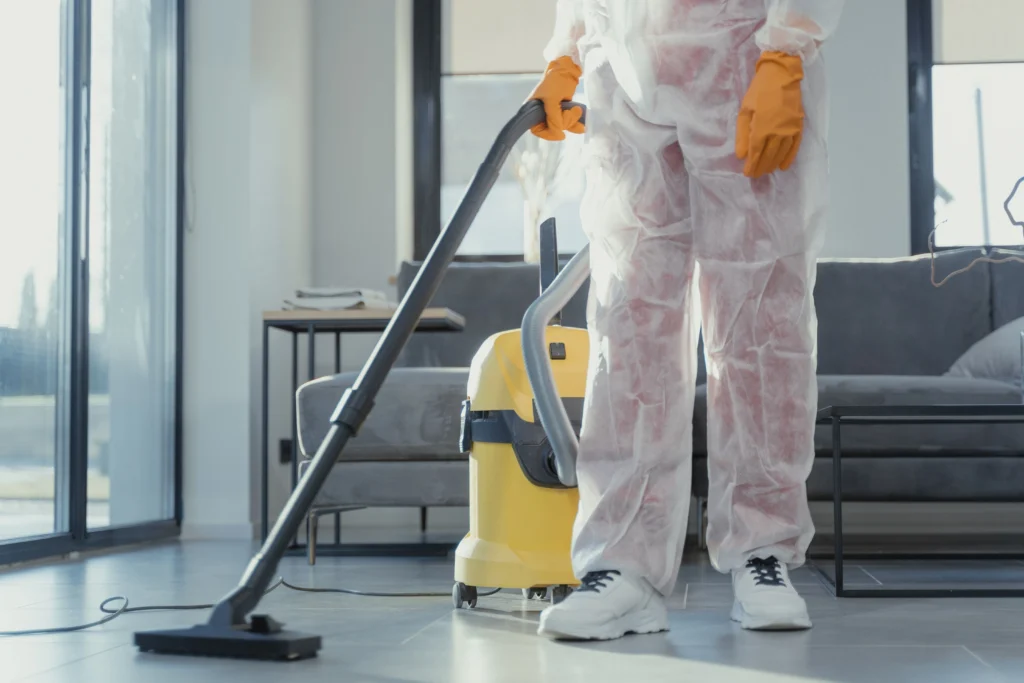
A standard clean handles the maintenance work: dusting, wiping, hoovering, mopping. It suits weekly or fortnightly visits where the property is already in reasonable shape. A professional deep cleaning service is the right starting point for first-time clients, post-renovation, post-tenancy, and seasonal cleans.
| Standard Clean | Deep Clean | |
| Frequency | Weekly or fortnightly | Every 3–6 months, or as needed |
| Scope | Surfaces, floors, visible dust | All of the above, plus built-up grime and residue |
| Oven and hob | Exterior wipe only | Interior clean included |
| Carpets | Hoovering | Deep extraction cleaning |
| Under furniture | Not included | Included |
| Best suited for | Maintained properties | First visits, post-move, post-renovation |
The practical rule is this: first-time clients, properties that have sat empty for a stretch, and post-renovation jobs all carry accumulated grime that a standard clean is not built to shift. That is where a deep clean begins, with a regular maintenance schedule following from there.
For post-build and refurbishment projects, the same logic applies: an after builders cleaning visit handles construction dust, plaster residue, and fine debris that standard cleaning methods are not equipped for.
How to Use This Checklist to Compare Cleaning Services
A house cleaning service checklist is not only a tool for cleaners. It is one of the most practical things a homeowner can use to compare providers and verify quality. Here is how:
- Ask for the provider’s checklist before booking. Any reputable house cleaning service should be able to provide one without hesitation.
- Do a walkthrough after the clean and tick tasks off against what was agreed.
- Use the checklist as a benchmark when comparing quotes. If two companies are charging meaningfully different amounts for the same scope, the checklist is the quickest way to find out what is and is not actually included.
- Save it for future bookings so expectations stay consistent across every visit.
A reputable provider will welcome the scrutiny. One that will not share their checklist is telling you something useful before you have spent a penny.
Hold Every Provider to the Same Standard
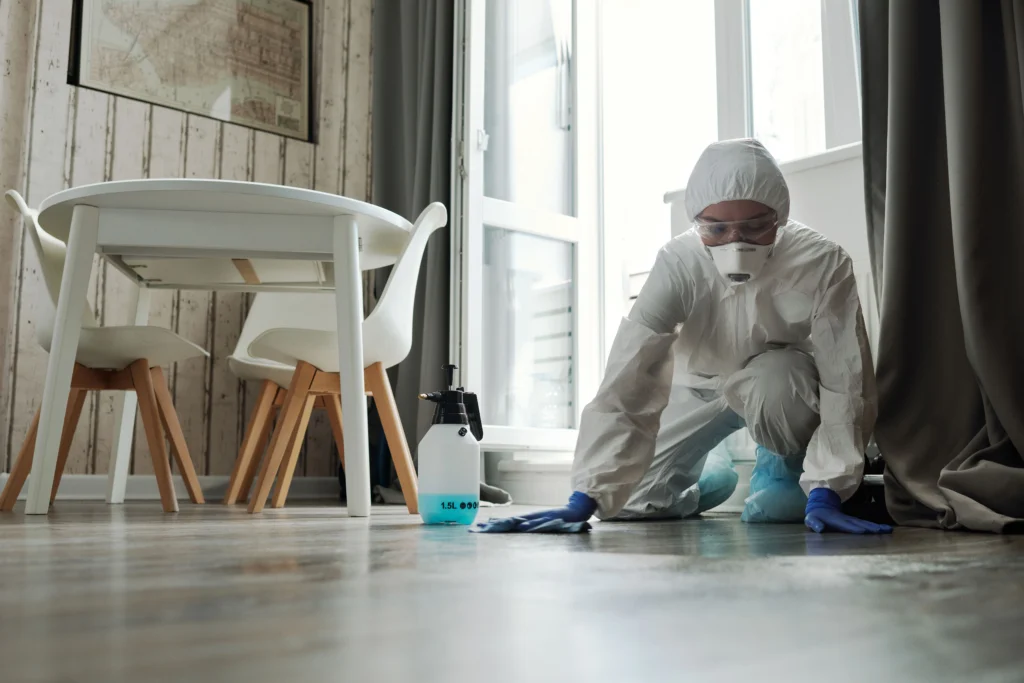
A complete, room-by-room house cleaning service checklist is the difference between a clean that looks fine and one that actually is. Knowing where a standard clean ends and a deep clean begins, and what questions to ask before any provider sets foot through the door, puts you in a stronger position as a client. Book your house cleaning service online and see what doing it properly actually looks like.
FAQs About House Cleaning Service Checklist
What is typically excluded from a standard house cleaning checklist?
Standard cleans generally do not include window cleaning, cleaning inside fitted wardrobes, washing walls, deep descaling of taps, or moving and cleaning behind large appliances. These fall under deep clean or specialist services.
Should I supply my own cleaning products?
That depends on the provider. Some arrive with everything they need; others expect you to supply the products. Always confirm before booking, as it can affect what is achievable on the day.
How often should a property receive a full professional clean?
For a property in regular use, weekly or fortnightly standard cleans keep things on track. A thorough deep clean every three to six months, or after a significant event such as a move or renovation, keeps the property in the condition a standard visit can maintain.
Does a house cleaning checklist look different for a flat compared to a house?
The rooms differ, but the approach does not. Every space is tackled in the same logical order: high-risk areas like kitchens and bathrooms first, then bedrooms and living areas.